The Scenario: Operation RIVER GATE
This is the tactical situation you will use for the entire course.
1. Situation
| Feature | Definition |
|---|---|
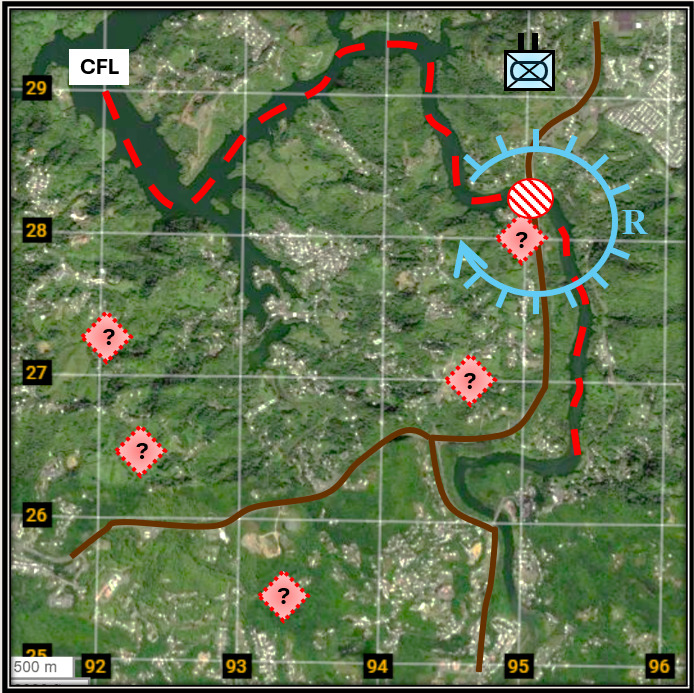
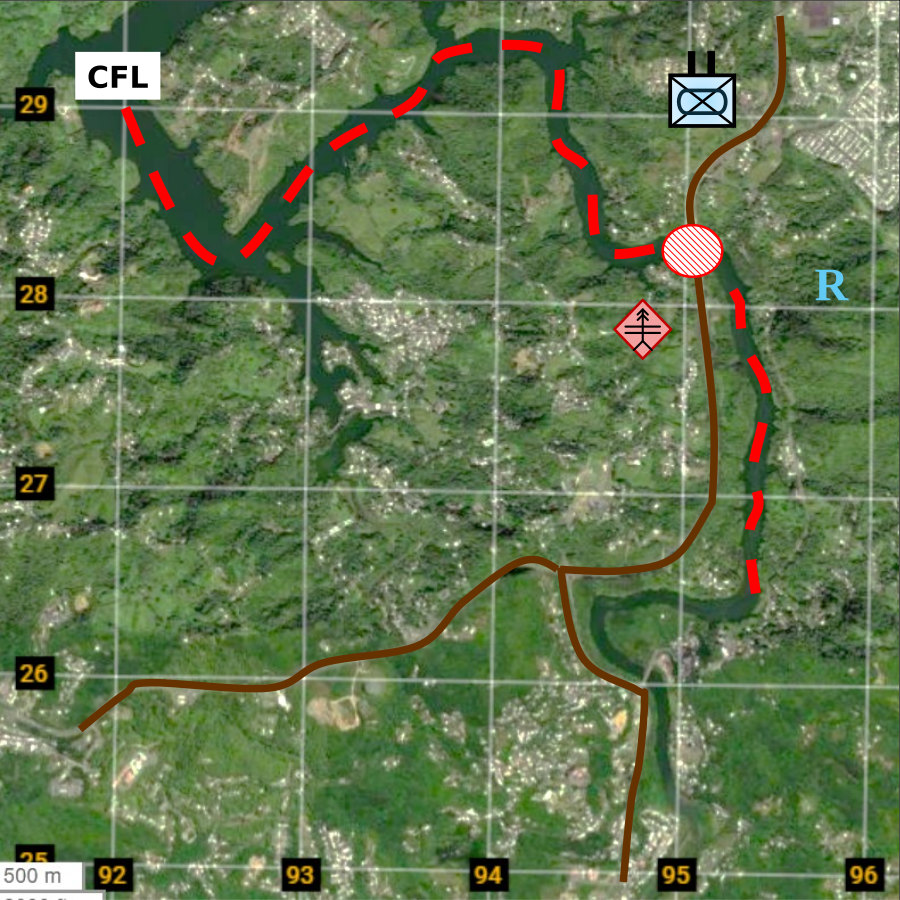
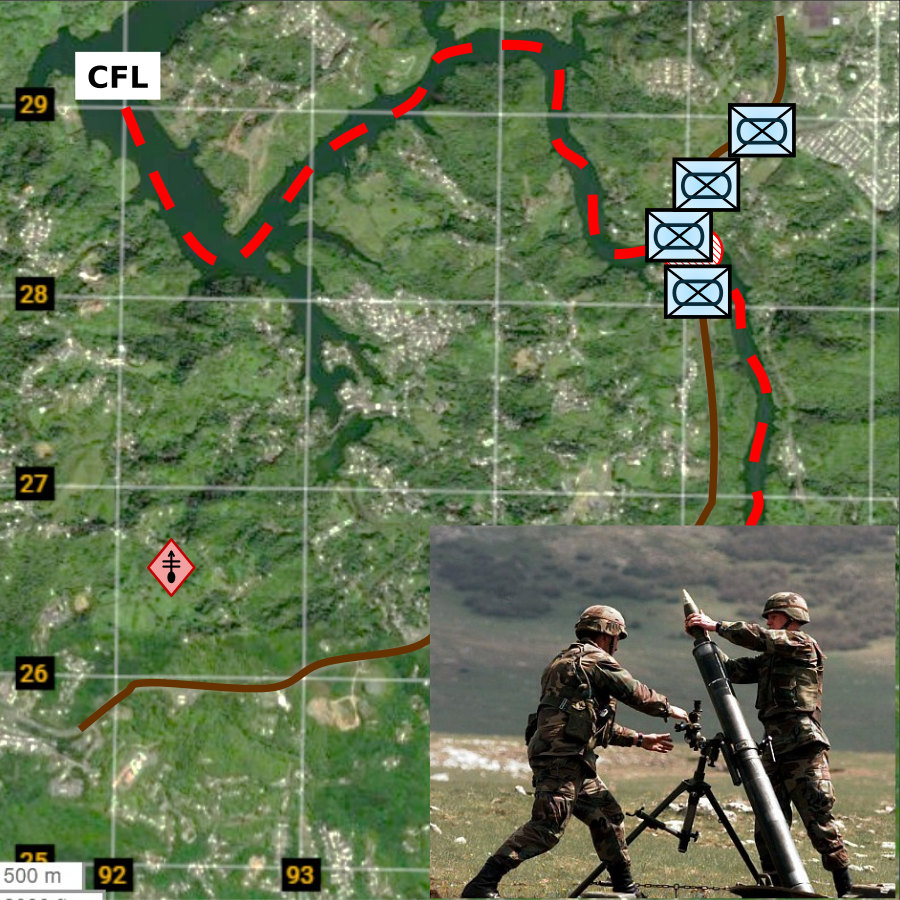
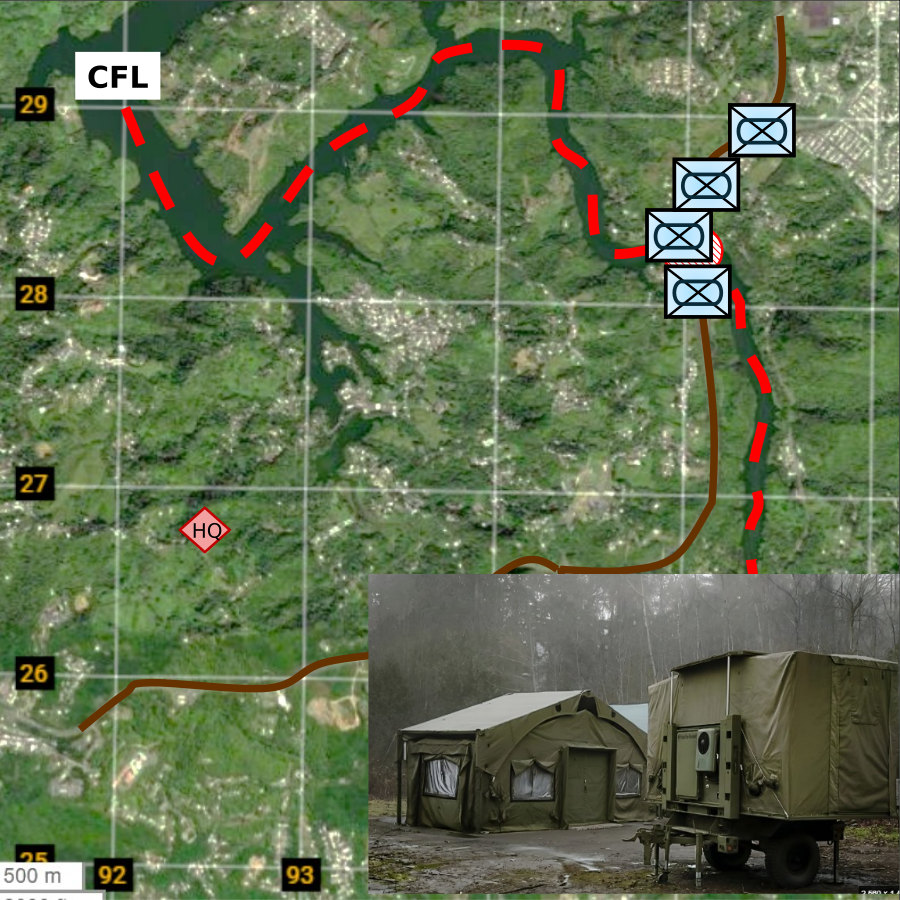
| CFL — coordinated fire line | Beyond this line, fires may be delivered without further coordination with the units in contact. Short of it, every mission must be cleared first. The CFL will move south to the 27th northing at T=0, when friendly units take the bridge. |
| R — retain | The friendly tactical task at the bridge: hold it, and deny its use to the enemy. |
| Restricted fire area (RFA) around the bridge | The commander forbids cratering munitions inside it. Only the one-way attack UAS may strike here. |
| Suspected enemy | Status |
|---|---|
| Command post | Unlocated. |
| Logistics vehicles | Unlocated. |
| Infantry platoon | Unlocated. Assessed to be near grid 945 270. |
| Mortar platoon | Unlocated. |
| Field kitchen | Unlocated. |
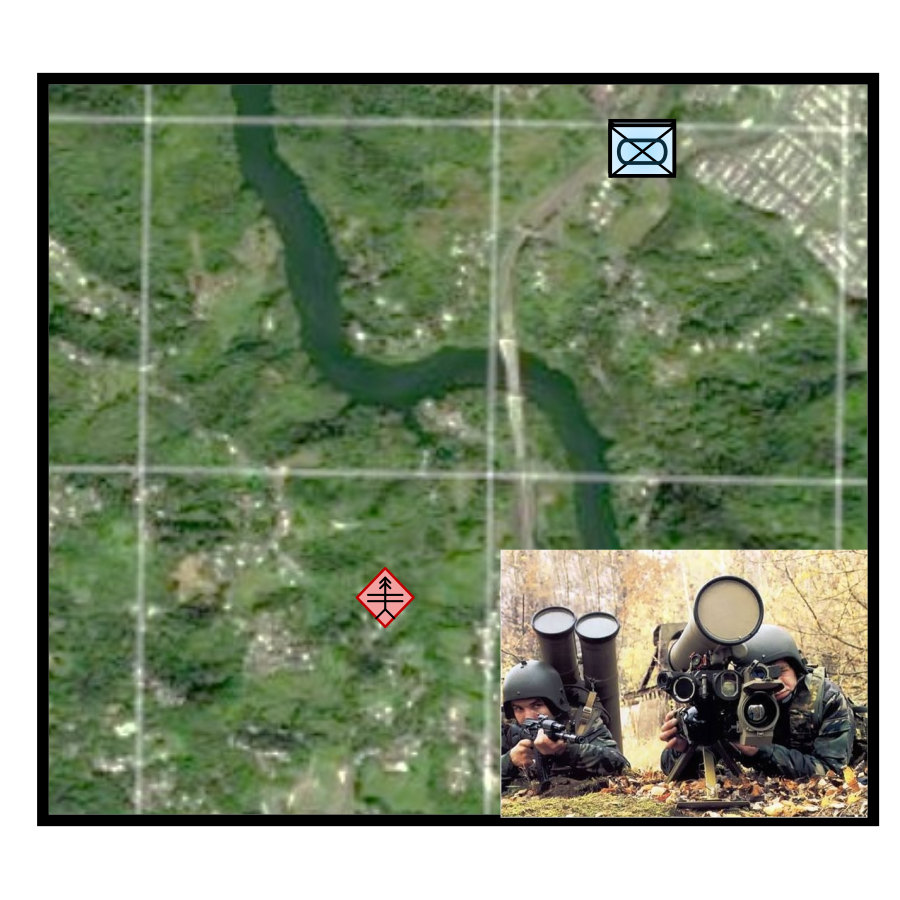
| Anti-tank guided missile (ATGM) team | Located. Detected by a reconnaissance flight 12 hours ago, directly south of the bridge, grid 950 280. |
| Engineering team | Unlocated. Assessed to destroy or block the bridge. |
| Ammunition supply point | Unlocated. |
2. Our Mission and the Commander's Guidance
You are a member of the Fire Support Coordination Cell of the 77th Combined Arms Brigade.
Mission: on order, the 77th Combined Arms Brigade seizes the Kordan River bridge in order to allow follow-on forces to reinforce the assault.
Brigade Commander's Targeting Guidance
“Fires must accomplish three things for me:
- Protect the bridge — stop the enemy engineers before they can drop it or block it.
- Disrupt enemy indirect fire — do not allow the enemy to use mortars on friendly units as we are forced to concentrate near the bridge.
- Disrupt enemy command and control — there is a significant risk the enemy will request indirect artillery fire or reinforcements when he learns friendly forces are concentrated near the bridge. We must disrupt his command and communications network to mitigate this risk.
Restriction on fires near the bridge. “No cratering munitions on or near the bridge — nothing that could damage the span, the abutments, or the approach road. Artillery and mortars are forbidden inside 300 metres of the bridge.”
3. Intelligence Brief (S-2)
Intelligence Preparation of the Operating Environment (IPOE) is complete. The enemy is likely to defend, then delay, on the southern side of the river.
Enemy Most Likely Course of Action
The enemy will take every action to block our advance to the south.




Destroy or block the bridge
The enemy is assessed to accomplish this by attempting to destroy or alter the bridge with their engineer team.
The engineer team is not on the bridge yet, and once it begins work about one hour is enough to make the bridge unusable.
Ambush the crossing
If unsuccessful, they will attempt to ambush friendly forces as we are vulnerable when crossing the bridge. We have already detected their anti-tank guided missile (ATGM) team, which is in position for this ambush.
It is not likely that the enemy engages friendly forces directly with the infantry, because our mechanized vehicles are too powerful. Instead, they will likely harass and delay friendly forces south of the bridge.
Fires on the choke-point
It is also highly likely that the enemy will engage us with their mortar platoon when we are at the known choke-point on or near the bridge.
His mortar platoon displaces immediately after every fire mission.
Ask for fires from a higher headquarters
Lastly, the enemy command post has the capability to request fire missions from their higher headquarters, which they may do as a last resort.
The enemy relocates his command post every 24 hours.
4. Friendly Fires Assets: The Sensors and Shooters we have Tasking Authority Over
The brigade has three ways to deliver fires and three ways to find targets.
| Asset | Considerations | Time | Authorized within the RFA? | |
|---|---|---|---|---|
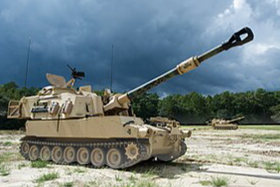 | M109 155 mm self-propelled howitzer battalion | Longest range. Largest shell. | Once employed, the battery displaces and is unavailable for 20 minutes. | No |
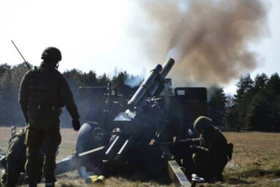 | M101 105 mm howitzer battery | Medium range. Medium shell. | Once employed, the battery displaces and is unavailable for 30 minutes. | No |
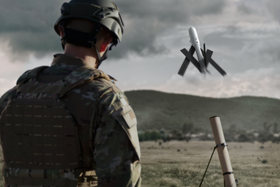 | One-way attack UAS (OWA-UAS) | Smallest range. Smallest charge, but precision guided. | Can engage all targets in our area of responsibility. Can take up to 20 minutes to reach its furthest range. | Yes |
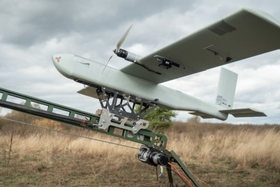 | Long-range ISR UAS | Real-time video displayed in the friendly command post. | Capable of 2 hours of flight time. | — |
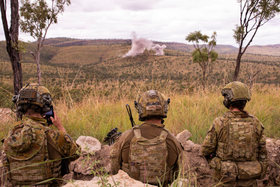 | Scout team | Soldiers in a hidden position. | — | |
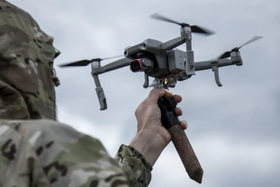 | Small UAS (sUAS) | Short-range quadcopter drone. Deployed by the scout team. | Only capable of 20 minutes of flight time before returning to change batteries. | — |
Note the difference between the two aircraft: the long-range ISR UAS looks deep and stays a long time; the sUAS looks close and stays a short time. The OWA-UAS does both — look and strike — but only once.
Task: Confirm you understand the mission
Scenario Check
NOT DONEQuestion
Our mission is written at the top of this page. What does it require of us?